Secret Santa Etiquette: The Do's and Don'ts Nobody Tells You
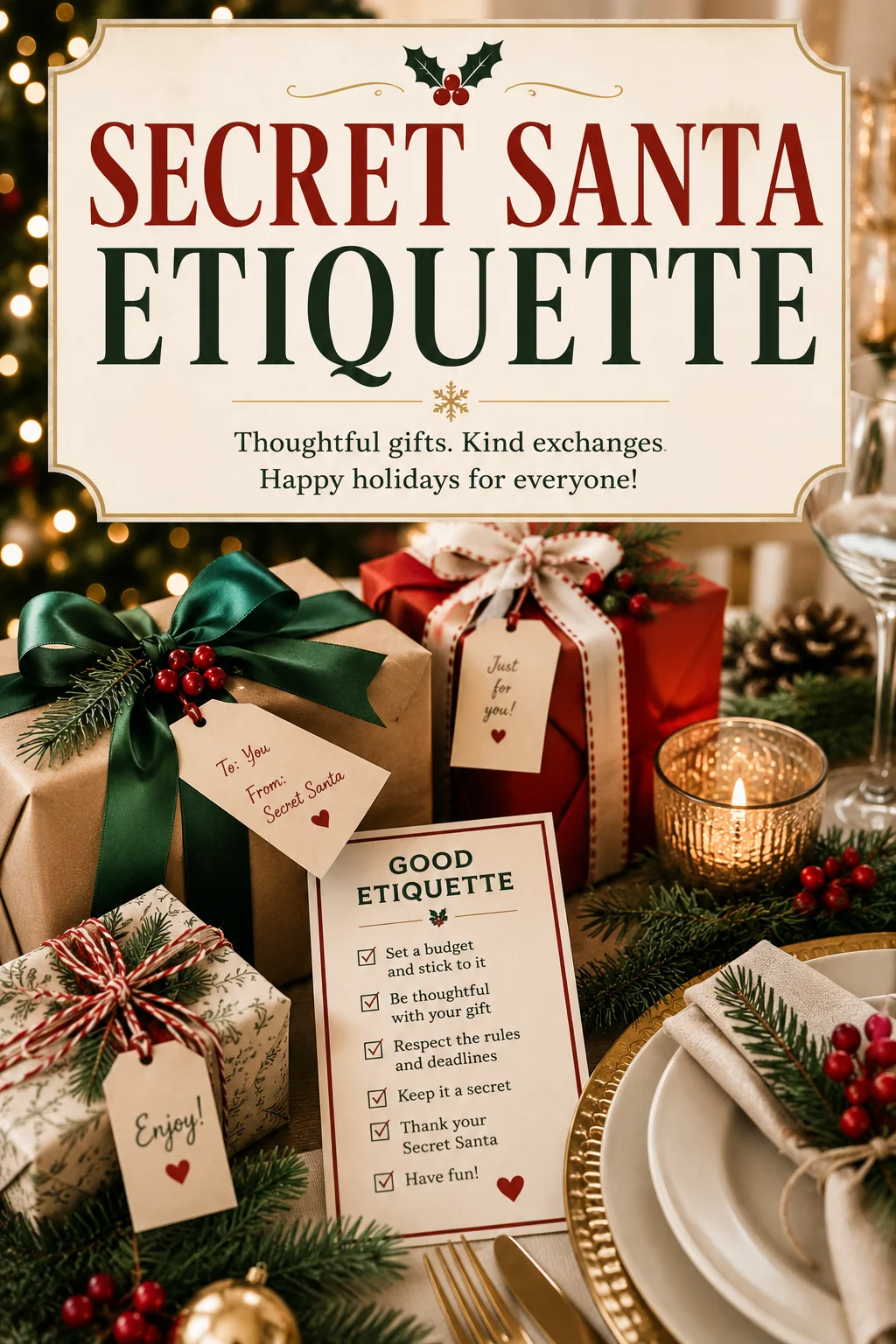
Secret Santa etiquette is mostly unwritten, which is exactly why it causes problems. Nobody tells you that spending $8 in a $25 exchange is considered rude. Nobody warns you that asking someone point-blank if they drew you is a genuine faux pas. Nobody explains that "the thought that counts" only applies when there was actually a thought.
So here it all is — the unwritten rules that most people figure out after at least one awkward Secret Santa moment.
As a Participant: Your Core Responsibilities
Before anything else, understand your basic obligations once you agree to participate:
Commit and follow through. The moment you say you're in, someone in the draw is counting on you. Backing out close to the exchange — especially without enough notice for your giftee to be reassigned — is inconsiderate. Backing out after the deadline is genuinely bad form.
Stay within the budget. This means both directions: don't spend significantly less because you don't know the person or couldn't be bothered, and don't overspend because you want to impress. The cap is a collective agreement, not a suggestion.
Keep the secret. The whole game depends on anonymity. Don't tell your best friend who you drew. Don't drop hints to your giftee. Don't tell anyone how much you spent, what you're getting, or any details that might narrow it down. Keep it.
Wrap the gift. Not beautifully — just properly. Gift bag with tissue paper is completely fine. The item in the original packaging with no wrapping is not. The physical presentation is part of the experience.
The Budget Rule, Explained Properly
This deserves its own section because it's the most commonly misunderstood rule in Secret Santa:
The budget cap applies upward and downward. People get the upward part — don't spend $60 in a $25 exchange. The downward part is less understood but equally real: spending $8 in a $25 exchange is the same kind of etiquette violation. It signals you didn't try, or that your giftee isn't worth your effort.
"I couldn't find anything good for $25" is rarely true. It usually means you didn't look hard enough, or you defaulted to the first section of whatever shop you walked into. A little research — even ten minutes on Google — produces real options at almost any budget.
The exception: if the budget is genuinely beyond your means this year, talk to the organizer privately before the draw. Most organizers would rather quietly adjust than have someone participate under financial stress.
The Anonymity Rules
Keeping your identity secret is the actual game. Here are the specific places people slip up:
Don't ask your giftee if they drew you. Even if you're pretty sure they did. Even if you're dying to know. The anonymity runs both ways — you don't know who has you, and you're not supposed to try to find out.
Don't leave identifying information in or on the gift. Check the wrapping, the tag, the bag, and the receipt if you left one in. Your name should not appear anywhere.
Don't describe your gift to anyone. "I got them something blue" is technically fine. "I got them this hiking water bottle I found at REI because they mentioned Yosemite in October" is enough information for anyone in a small group to figure out who you are.
Don't react noticeably at the reveal. If your giftee unwraps their present and glances around the room, a sudden guilty smile in your direction is a tell. Keep it neutral until the giver reveal.
Don't confirm or deny if asked directly. "Was it you?" — the correct response is something vague and cheerful: "The exchange hasn't been revealed yet!" This is more fun than lying and doesn't break the rules.
What Makes a Good Secret Santa Gift
The goal isn't the most expensive gift. The goal isn't the most clever gift. The goal is a gift that shows you thought about the actual person who drew your name.
A good Secret Santa gift is:
- Within the budget
- Something the person would genuinely use, enjoy, or appreciate
- Wrapped properly
- Accompanied by a short, warm note (not required, but a nice touch)
A lazy Secret Santa gift is:
- A generic candle you grabbed at the last minute with zero thought about whether this person even likes candles
- A gift card from the gas station on the way to the exchange
- Something you own and wanted to get rid of
- Something entirely about your own taste, not your giftee's
There's nothing wrong with a gift card — a thoughtful one, from a place your giftee actually likes — but a random gift card from a chain you chose because it was convenient is a different thing entirely.
How to Receive a Gift Graciously
This is the part of etiquette that gets less attention, but it's real: how you react to your gift matters.
The baseline: Thank the giver warmly, look genuinely pleased with whatever they gave you, and mean it in the moment. This isn't about faking enthusiasm — it's about focusing on the gesture and the effort, not the object.
What not to do:
- Say "oh, I already have one of these" in front of the group
- Look visibly disappointed
- Compare your gift to someone else's
- Ask if there's a receipt
What to actually do: Open it, look at it, find the genuine thing to appreciate about it (someone spent time and money selecting this for you), and express that. "This is so sweet, thank you" is always correct. You can have more complicated feelings about the actual object later, in private.
As the Organizer: Your Etiquette Obligations
Running the exchange comes with its own set of responsibilities:
Don't share information you shouldn't have. If you happen to know who drew whom (because you ran the draw), that information stays with you. You don't use it to hint, to help, or to influence anything.
Respond to questions promptly. If someone has a problem — assignment not received, confusion about the rules — handle it quickly and privately.
Set the tone. At the reveal, your energy sets everyone else's. Enthusiastic and celebratory is what you're going for.
Have a backup gift. Not optional for an organizer. Someone always needs it.
The Gray Areas
A few situations where etiquette gets murky:
Is it okay to tell your partner who you drew? Technically it's a rule break, but in practice many people do this — especially for shopping help. The etiquette rule is: your partner tells nobody else.
Is re-gifting acceptable? Only if the item is brand new, genuinely appropriate for your giftee, and not something you received from a mutual friend. If there's any chance the original giver is in the room, never.
What if your gift is genuinely bad — something offensive or inappropriate? The organizer handles this privately. The receiver shouldn't have to manage the moment publicly.
Frequently Asked Questions
Is it rude to return a Secret Santa gift?
Not inherently — returns are a practical reality. The etiquette issue is making a show of it, especially in front of the giver. If you need to return something, do it quietly after the event. The giver doesn't need to know unless you've already become friends over the exchange reveal.
What do you do if your Secret Santa forgot to get you a gift?
The graceful move: say nothing publicly. The organizer should have a backup gift for exactly this situation. After the event, you can mention it quietly to the organizer — but it's worth being charitable first. Life happens.
Is it okay to spend slightly over the cap if you found something perfect?
A small overage (5–10%) is generally fine. Spending 50% over the cap is not — it changes the dynamic for everyone else. If you found something perfect that's slightly over, buy it; if "slightly over" means you're at double the budget, scale back.
What's the etiquette on gift notes or cards?
A short note is always a nice touch. It doesn't need to reveal who you are before the reveal — "Hope you enjoy this! 🎅" is perfectly appropriate. It adds warmth without breaking the secret.
How do you politely ask someone to follow the budget?
You don't do it publicly. If you know someone tends to overspend or underspend, the organizer can send a private, friendly reminder before gifts are due: "Just a reminder that the cap is $25 — we want to keep things fair for everyone." Kind, clear, no confrontation.
Is it bad form to ask for a receipt with your Secret Santa gift?
Yes, in the context of the exchange itself. If you genuinely need to exchange a size or return something, do it quietly after the event. Asking for a receipt at the reveal communicates that you're planning to return the gift — which is fine privately, but awkward to broadcast.