Secret Santa for Small Groups: When You Know Everyone
Small group Secret Santa is a different experience than the large office exchange. When there are only 5 or 6 of you, the gift says more — everyone will see it, everyone will know who gave it, and the thoughtfulness (or lack of it) is visible.
This also means the gifts can be significantly better. Everyone knows everyone's preferences, the guessing game at the reveal is more meaningful, and the budget can be calibrated to what the group actually wants rather than the lowest common denominator.
What's Different About Small Groups
Everyone knows who gave what. Even with a proper anonymous draw, small groups often figure out gifters quickly. The reveal in a group of 6 where everyone knows everyone is more like confirmation than surprise.
The gift quality ceiling is higher. Because gifters have more information about their recipients, the best gifts in small group exchanges tend to be more thoughtful and specific than large group equivalents at the same budget.
Misses are more visible. A thoughtless gift in a small group is seen by everyone and remembered. The stakes create a natural incentive for everyone to try harder.
The experience is more intimate. Small group reveals feel warmer. The gifter watching the recipient open in a circle of 6 close friends is a different moment than the same thing in a crowd of 30.
Running the Draw
For groups of 4–8, a manual draw (folded paper in a hat) works perfectly well. For 8–12, an online generator saves time and handles the no-self-assignment logic automatically.
For very small groups (4–6): The draw is simple. The bigger challenge is the exclusion conversation: who would rather not gift to whom? In small groups, everyone knows the preferences — couples, best-friend pairs, anyone with a complicated recent history. Handle exclusions before the draw, not after.
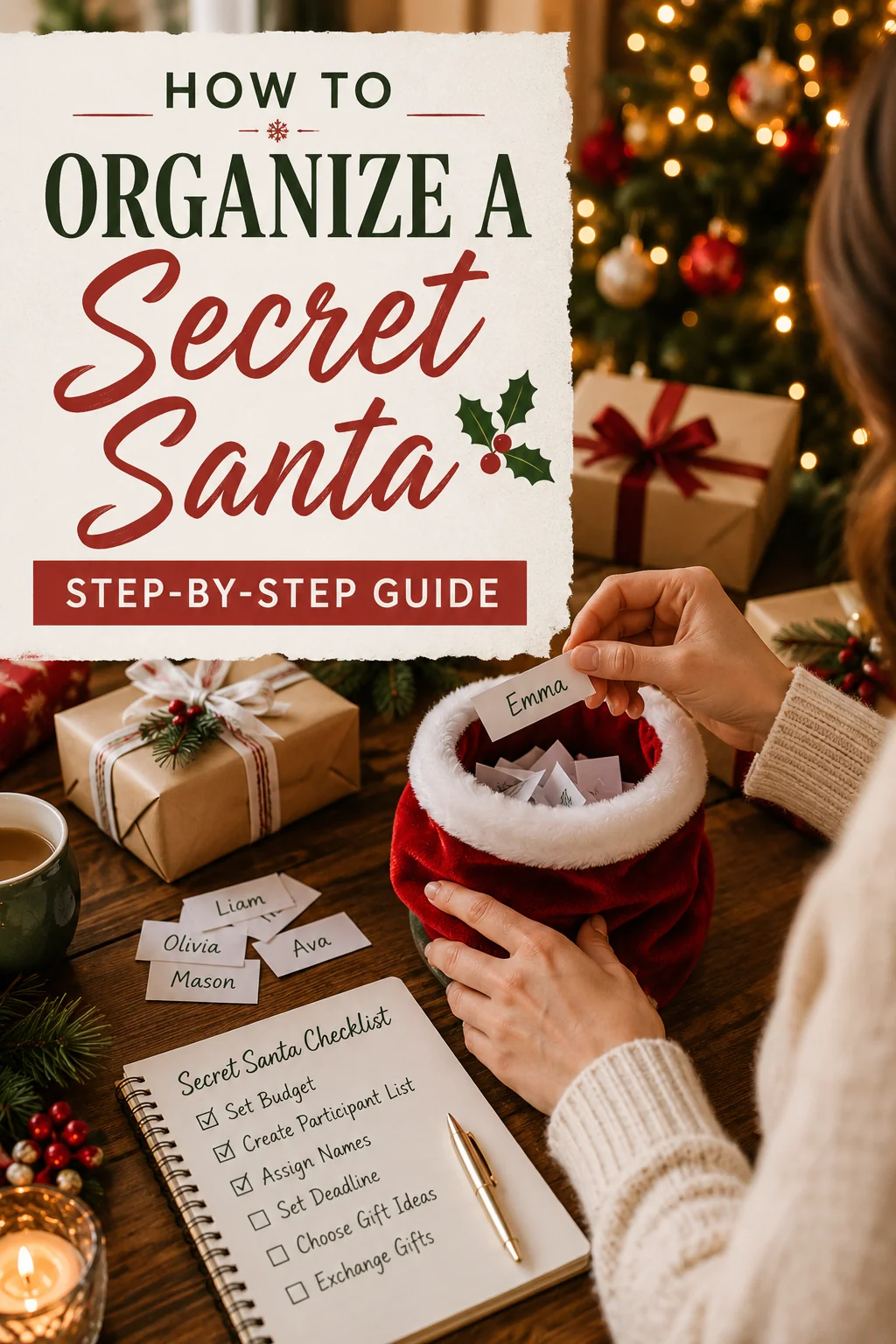
The draw method for 4–6:
- Write names on slips of paper
- Each person draws one, puts it back if they drew themselves, redraws
- If anyone draws someone with an exclusion, redraw that person's slip only
For groups over 8, use the generator to avoid assignment chains that require multiple redraws.
Setting the Right Budget
Small group budgets tend to be higher than large group budgets, and for good reason — the relationship level supports it and the gift quality is expected to match. Common ranges:
Close friend group, $30–$50: This range lets gifters buy something genuinely good rather than something merely adequate. Quality at this budget is significantly higher than at $20.
Family exchange, $25–$40: Family groups often know each other's preferences best, which means a $30 gift can be very well-targeted. Budget goes further when the research is solid.
A group where budgets vary: Set the limit at the comfortable end for the least financially flexible member. A soft limit ("$35, no pressure to hit the top") is always better than a hard limit that makes some people uncomfortable.
Making the Gifts Better in Small Groups
The small group advantage is information. Use it:
Reference something specific they said. In a small group, someone's mentioned something they want or need in the last few months. "You mentioned your [X] was worn out" or "you've been talking about trying [category]" is the most direct path to a good gift.
Coordinate to avoid duplicates. In a small group, it's worth checking with other gifters whether the category you're considering has already been covered. A group of 6 where 3 people give food gifts and 2 give candles produces a skewed pile. Light coordination prevents this.
Use the questionnaire. Even in a small group, a 3–5 question form produces better gift decisions. People reveal things in writing they wouldn't think to mention in conversation.
Add a personal touch. A small group gift with a short handwritten note that references your actual relationship hits harder than the same gift with a generic card. The intimacy of the group makes this the expected register.
The Reveal in Small Groups
Small group reveals are inherently better than large group ones — you can go slower, the room is smaller, and everyone can see everyone else's reaction.
Recommended format:
- One gift at a time, with the group watching
- Recipient guesses gifter before opening
- Recipient opens
- Gifter reveals and says one sentence about why they chose it
- Natural conversation follows before moving to the next gift
Allow 5–7 minutes per gift. For 6 people, that's 30–42 minutes of genuine exchange — not a long party event, but a real experience.
Handling the Small Group Awkwardness
Small groups create specific awkward situations large groups don't:
"Someone clearly spent more than the limit." In a small group, this is visible to everyone. Handle it by establishing a firm limit (not a range) or by normalizing going slightly over with "the limit is $30 but nobody is policing it." Either approach works; vagueness doesn't.
"The gift is clearly from [person]." In a small group, the gifter reveal often happens by accident before the official reveal — someone's wrapping is recognizable, or the gift is obviously from the one person who knows about that interest. Let it happen naturally; forced anonymity in a group of 6 close friends is mildly performative.
"Someone didn't try very hard." Visible in a small group. The best prevention is framing: "let's all actually put some thought into this" at the invitation stage. Groups that name the expectation explicitly tend to deliver on it.
Frequently Asked Questions
How small is too small for Secret Santa?
Four people is the practical minimum. Below four, the anonymity disappears entirely — if there are only three gifters, everyone knows immediately who gave what. At four, you have at least a moment of guessing.
Is Secret Santa better in small groups or large groups?
The experience is better in small groups — more intimate, more thoughtful, more conversational. The logistics are simpler in large groups. The optimal Secret Santa group size is probably 8–12: small enough to create a real experience, large enough to maintain meaningful anonymity.
What should the budget be for a small friend group?
$30–$50 is the common range for close friend groups. This budget allows genuinely good gifts — quality items rather than adequate ones. Set the limit at whatever the least financially comfortable member considers reasonable.
How do you do Secret Santa if your group is just 4 people?
A standard draw works perfectly at 4. Each person draws one name, buys one gift, and opens one gift. The anonymity is thinner than in larger groups but still present until the reveal. The reveal moment in a group of 4 close friends is often the most satisfying of any exchange size.
Should you use a theme for a small group?
Optional, but themed small group exchanges often produce the best gifts of any format. A book exchange or food exchange in a group of 6 creates more interesting gifts than open-ended shopping — the constraint forces creativity and the small group size means every gift is seen by everyone.
Do small groups still need a questionnaire?
Less necessary than in large groups, but still useful. Even close friends don't know everything about each other's current wants and preferences. A 3-question form often surfaces something the gifter didn't know — "I've been really into [new interest]" being the most common useful answer.