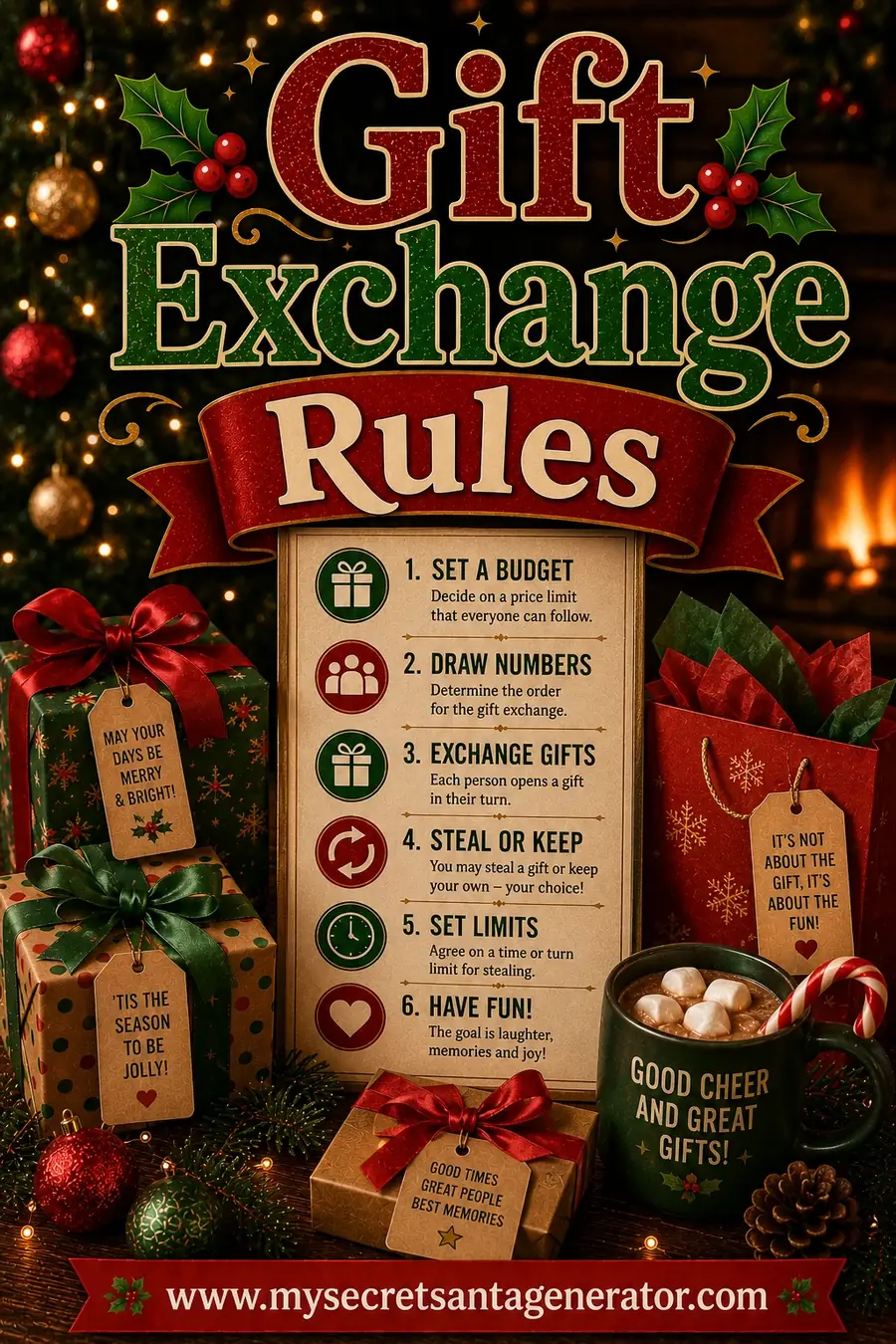
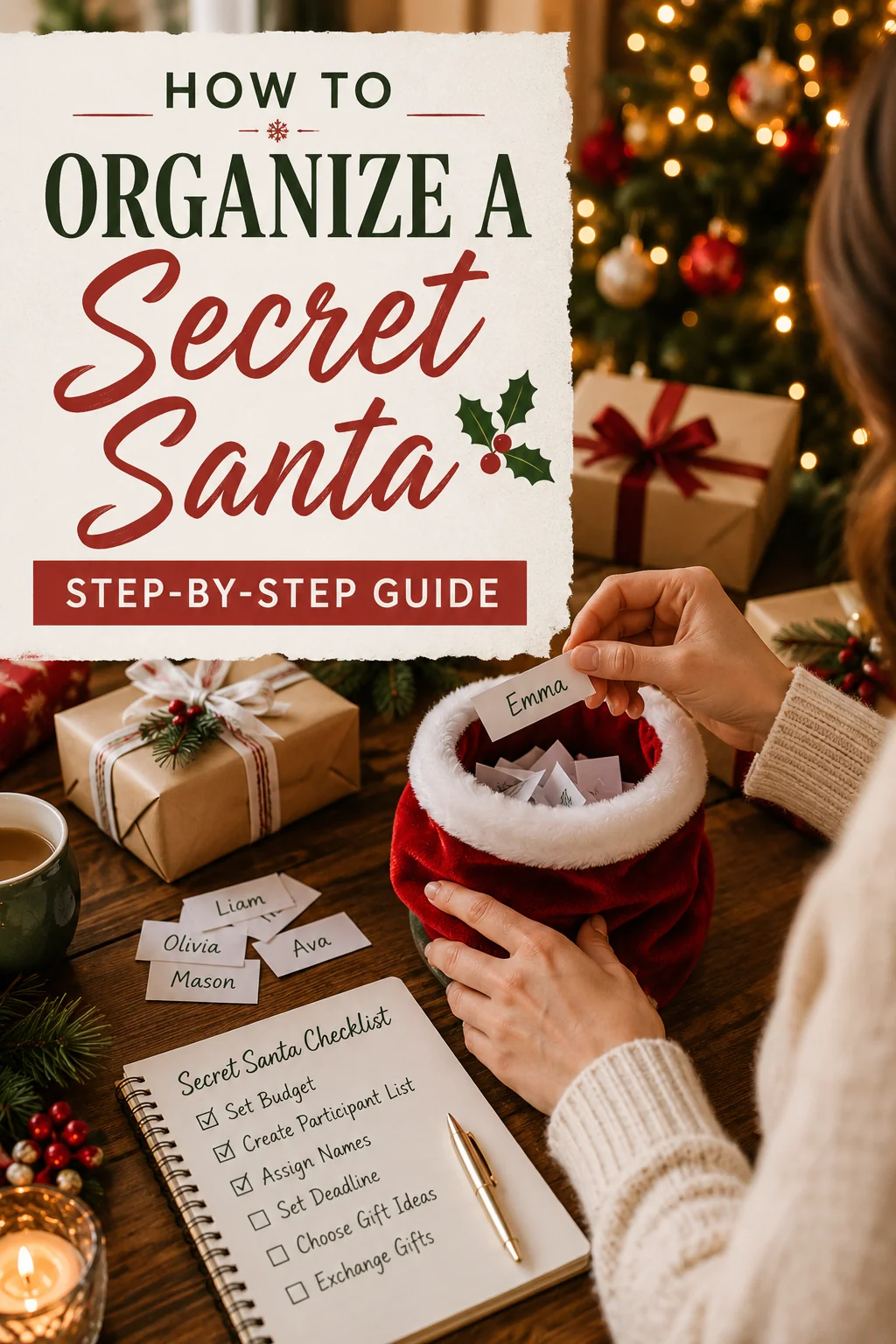
How to Organize a Secret Santa: A Step-by-Step Guide
You volunteered to organize it. Or, more likely, you were voluntold — someone looked at you, said "you're good at this stuff," and suddenly the whole exchange is your responsibility. No worries. Organizing a Secret Santa is genuinely easy once you know the order of operations.
The problems only happen when people skip steps or do them out of order. Set the budget after the draw and you'll have three people complaining it's too low. Forget to set exclusions before sending assignments and now couples drew each other and everyone's annoyed. Do it right the first time and your whole group will thank you by actually enjoying themselves.
Here's exactly how to run it.
Step One: Get Real Commitments Before You Do Anything Else
This is the step people skip, and it causes most of the later chaos. Before you set a budget, before you draw names, before you do anything — get a confirmed headcount.
Send a message asking who's in. Give a deadline: "Reply by Friday if you want to participate." Anyone who doesn't reply by then isn't in the draw. This sounds harsh but it prevents the scenario where you've already drawn names and then two people say they can't afford it this year, leaving their giftees with nothing.
You're not being mean — you're being organized, and your group will appreciate it.
Step Two: Set the Budget First (Always First)
The budget needs to be set and agreed upon before names are drawn. Not after. Not at the same time. Before.
Send a quick poll or just suggest a number and ask if it works for everyone. The goal is a cap that the person with the least disposable income in the group can genuinely manage without stress. If one person's budget ceiling is $20 and another's is $80, the cap is $20 — because the alternative is someone feeling embarrassed about their gift.
Once the number is agreed upon, it's locked. Make that explicit: "The cap is $20. Spending significantly less isn't cool, and spending significantly more makes everyone else feel bad." Say it nicely, but say it.
Step Three: Decide on Exclusions
Before the draw, ask if anyone needs to be excluded from drawing certain people. The most common exclusions: couples or partners (they're already exchanging gifts), sometimes siblings who live together and share finances, sometimes work situations where reporting relationships make it awkward.
Collect all the exclusions first, then do the draw. Trying to swap assignments after the draw means the organizer learns information they weren't supposed to know — and now the whole "secret" part is compromised.
Step Four: Draw the Names
With your confirmed list and exclusions in hand, you're ready to draw. Two real options:
The hat method works fine for small groups where everyone can be in the same room simultaneously. Write names on paper slips, fold them, mix, and draw. The downside: the organizer sees everything, exclusions require multiple redraws, and it falls apart entirely for remote participants.
An online generator handles all of this automatically — exclusions, random assignment, and email delivery so each person gets only their own assignment and the organizer genuinely doesn't know the full draw. For any group over about eight people, or any group with remote members, it's just the better tool.
Step Five: Collect Wishlists or Send a Questionnaire
This is the step that separates a good Secret Santa from a great one. Give people a way to share what they'd like so their giftee isn't shopping completely blind.
You don't need anything elaborate. A simple questionnaire works well: favorite snacks, preferred color, current hobby, one or two things you actually need. Share the responses with the group after assignments are sent — each person gets their own giftee's answers, not the whole group's.
If your group resists filling in questionnaires, at least encourage people to share a price-range wish from a shop or two. Even one piece of real information helps.
Step Six: Set a Delivery Deadline (and Be Specific)
"Before the holiday party" is not a deadline. "December 15th" is a deadline. Be specific, put it in writing, and send a reminder a week before it hits.
If your group has an in-person gathering, that's the natural deadline — gifts arrive at the event, everyone opens together. If it's a remote group, set a mail-by date that gives everyone enough time to receive their gift before Christmas.
Also: decide now whether gifts are opened at the event or in private. Opening together is way more fun but it requires coordination. Private opening is simpler but loses the communal moment.
Step Seven: Handle the Inevitable Drop-Out
Someone will drop out. Have a plan ready before it happens.
If there's time to redraw, redraw. If it's last-minute, the cleanest solution is for the organizer to step in and buy a gift themselves. Some organizers keep a "spare" — a solid neutral gift purchased in advance specifically for this scenario. Twenty dollars in gift cards from a coffee shop is a perfectly respectable backup.
Be firm about the drop-out policy up front. "If you commit and then bail less than a week before, you still owe the group a gift" is a totally fair rule that significantly cuts down on last-minute exits.
Step Eight: Plan the Reveal
Decide in advance how the reveal happens. The options:
Open together as a group — one person opens at a time, giver reveals themselves after. This is the most fun version and creates actual memories. Works best for in-person exchanges with a manageable group size.
Silent opening — everyone gets their gift and opens privately. Easier logistically, but loses most of the magic.
Virtual reveal — gifts arrive by mail beforehand, everyone gets on a video call to open simultaneously. Surprisingly fun and works better than most people expect.
A Few Things Organizers Get Wrong
The most common mistakes, so you can avoid them:
Waiting too long to start. October or early November is the right time for most groups. Starting in mid-December gives people almost no shopping time and causes real stress.
Not confirming the budget is truly comfortable for everyone. If someone seems hesitant about the number, take it seriously. Lower the cap rather than have someone participate under financial stress.
Forgetting to communicate the rules clearly. Don't assume everyone knows that "Secret Santa" means anonymous until the reveal, or that re-gifting isn't okay. Write the rules out once, send them with the assignments.
Trying to do everything yourself in a large group. For anything over about 25 people, recruit one co-organizer. You're not being weak — you're being smart.
Frequently Asked Questions
How far in advance should you organize a Secret Santa?
Six to eight weeks before Christmas is the sweet spot for most groups. That gives people time to receive their assignment, actually think about the gift, order online if needed, and not be doing it in a panic the week before Christmas. October is not too early.
Should the organizer participate in their own Secret Santa?
Yes, absolutely — just use an online generator that keeps all assignments private, including the organizer's own. Good generators are set up so the organizer never sees the full draw, which means they can participate without knowing anything they shouldn't.
What if someone's budget genuinely doesn't match the cap?
Talk to them privately and either lower the cap for everyone, let them contribute a gift that fits their actual budget without announcement, or let them participate in the reveal and exchange without giving a gift this year. The worst outcome is someone feeling ashamed. There's always a graceful solution.
How do you handle it when the same person always gets a "bad" gifter?
There's not a perfect solution for this, but questionnaires help enormously — if the giftee's preferences are clearly stated, even an uninspired gifter can pull off something decent. You can also run the draw so the same pairs don't repeat from previous years.
Is it okay to tell someone who you drew?
Technically no — keeping it secret is the whole game. But realistically, in close friend groups, someone always tells their partner or best friend. The etiquette rule is: if you tell one person, that person tells no one. Breaking the chain matters more than the initial share.
What's the minimum group size for Secret Santa to actually work?
Four people, really. With three, everyone figures out the draw in about thirty seconds — there are only two possible arrangements and one of them gets ruled out immediately. Four is the minimum where it stays fun and mysterious.