Secret Santa Wishlist Ideas: How to Write One That Actually Helps
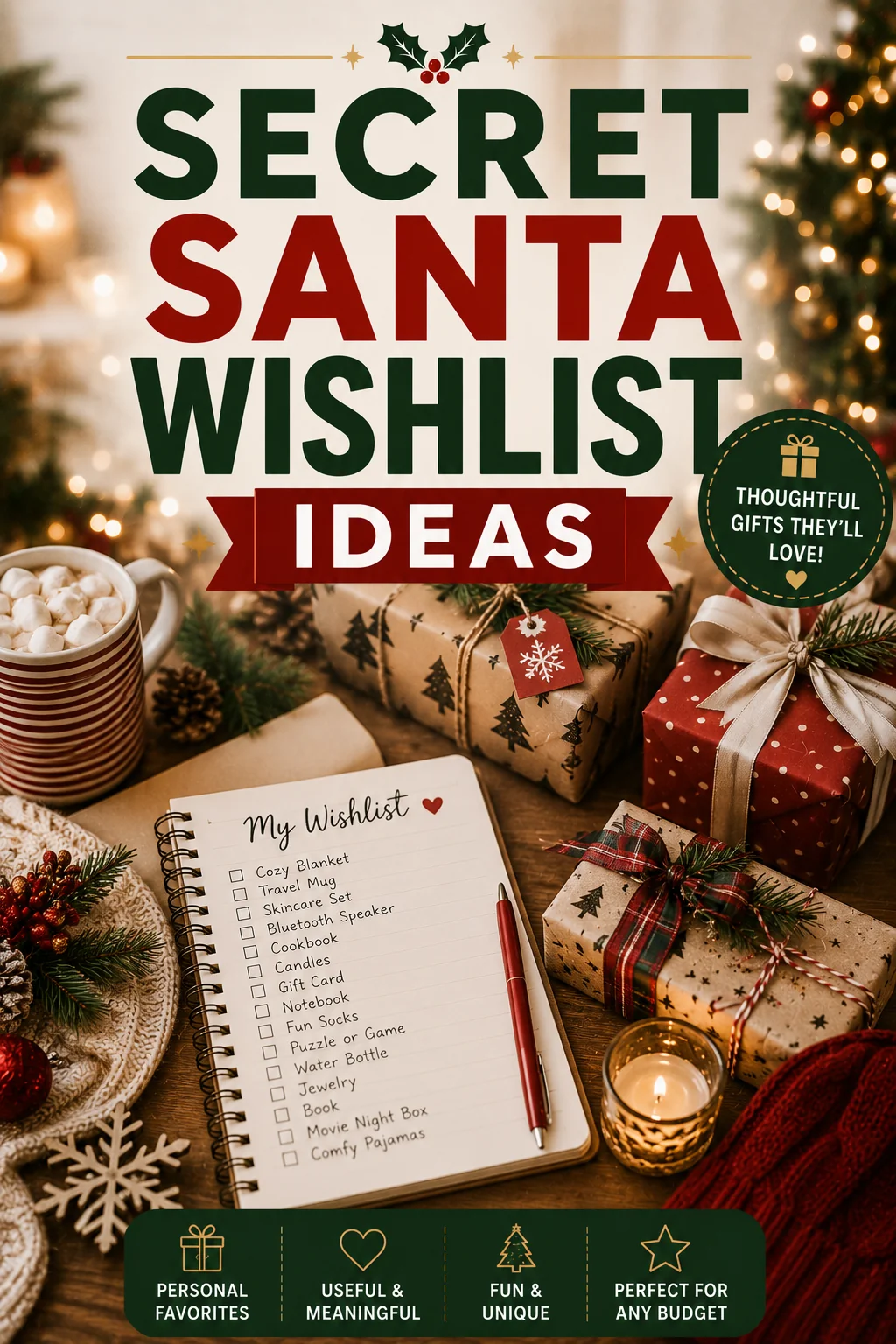
The Secret Santa wishlist is one of those things that's harder than it looks. You want to be helpful to your gifter without seeming demanding. You want to give options without making the choices feel like requirements. You want to suggest things within the budget without seeming like you've been calculating.
Done well, a wishlist gives your gifter enough direction to buy something you'll genuinely love while leaving them room to actually surprise you. Done poorly, it's either an intimidating shopping order or a vague list of ideas that's less useful than nothing.
The Wishlist Formula That Works
Give categories, not specific items. Instead of "the Le Creuset Dutch oven in French Blue, $320," write "anything kitchen-related — I've been cooking a lot more lately." Instead of a specific book with the ISBN, write "anything by this author or in this genre." Categories give your gifter direction while preserving their ability to choose.
Include at least one food or consumable option. This gives a gifter at any budget an accessible entry point. "I love specialty coffee" or "I'm really into good hot chocolate lately" immediately unlocks a whole category of gifts under $25 that will definitely land.
List brands or stores you like. This is the most directly useful information you can give. A gift from a brand you love, or a gift card to a store you shop regularly, is always a good gift. Name three or four.
Note one or two things you have plenty of. "I have approximately 40 candles right now" is genuinely useful information that prevents an obvious miss.
Range the suggestions. If the budget is $25, don't put your entire wishlist in the $75 tier. Include a mix of suggestions that cluster around the actual budget.
Wishlist Ideas When You Genuinely Don't Know What You Want
The hardest wishlist to write is the honest one: you're comfortable, you don't have a pressing want, and you feel weird listing anything. A few approaches that work:
The Experience Option
"Honestly, an experience would be wonderful — a class, a ticket, anything like that." This is never wrong, always appreciated, and gives gifters a clear direction without requiring you to specify a specific class or event.
The Consumable Request
"Something I can actually use up and enjoy — specialty food, good tea or coffee, a nice candle from a quality brand." This avoids the "I have too much stuff" feeling while giving a clear and achievable direction.
The Upgrade Request
"If you want to go practical: I use a [specific item] every day and mine is pretty worn out." The daily-use item that needs replacing. A fraying charging cable, a worn notebook, a coffee mug with a chip in it. Simple and immediately useful.
The Category Interest
"I've been really interested in [topic] lately — anything in that world would be great." This works when you're genuinely into something new. Give enough detail that your gifter can navigate the category.
The "Surprise Me" with Guardrails
"Surprise me with something — the only things I'd rather avoid are [X] and [Y]." The exclusions are the useful part; the rest is a genuine invitation.
Sample Wishlist Templates by Personality Type
The Foodie
"Food always works for me. I love specialty chocolate (dark, interesting flavors), anything interesting in the hot sauce or condiment world, good coffee (I drink pour-over, medium roast preferred), or a quality snack box. The one thing I'd skip: anything too sweet or candy-forward."
The Cozy Person
"Anything that makes my apartment more comfortable in winter. A quality candle from a real brand (I like wood or herbal scents), cozy socks in a ridiculous pattern, a warm drink kit, or a quality small throw. I already have lavender candles — not those, please."
The Practical Person
"Something I'll use daily — a quality pen, a charging cable that doesn't fray, a quality notebook, or a good desk item. I'm not a candles-and-bath-products person, but I genuinely use nice stationery. Brands I like: Leuchtturm, Muji, Anker for tech."
The Reader
"A book is always perfect. My current interests: narrative nonfiction, anything about food or cooking culture, or a novel with an unusual premise. Author I love: [specific name]. I also appreciate anything bookish — a beautiful bookmark, a reading light, a cozy reading accessory."
The Self-Care Person
"Anything in the skincare or self-care category. Specifically: I've been interested in trying better lip treatments, a good face oil, or anything from The Ordinary. I'm not a bath bomb person, but I love a quality face mask or a good body lotion."
The Person Who Has Everything
"Honestly? An experience. A class, a ticket, a gift card to a local restaurant we both love. Or surprise me with something consumable — good food, a quality drink. I'll enjoy anything thoughtful."
What to Include for the Gifter's Benefit
A wishlist is most helpful when it includes:
A primary suggestion with some detail. Not just "coffee" but "I love specialty coffee — pour-over, medium to light roast, not flavored." The specifics help enormously.
One or two alternatives. "Or anything in the self-care category — I've been neglecting my skincare routine and anything quality there would be appreciated."
At least one open option. "Or honestly, surprise me — the only things I'd skip are heavily scented products and anything for my kitchen, which is already fully equipped."
Budget alignment. Suggestions that fit within the exchange budget. If the limit is $25, don't put your entire wishlist in the $50+ tier.
Exclusions. The things to avoid. These are the most protective information on the list — they prevent the specific misses that produce polite smiles at unwrapping time.
Frequently Asked Questions
Should you give a specific Secret Santa wishlist or keep it general?
General is better for most exchanges. Categories and interests are more useful than specific product links — they give your gifter direction while preserving the ability to genuinely surprise you. Specific product requests can feel like shopping orders.
What do you put on a Secret Santa wishlist when you don't want anything?
Consumables (food, drink, a candle from a quality brand) and experiences. These don't add to your clutter and are genuinely enjoyable. A well-chosen food gift or experience requires no maintenance and creates no excess.
How long should a Secret Santa wishlist be?
3–5 options in different categories, ranging in specificity. Enough to give clear direction, not so many that it becomes a full shopping catalog.
Is it rude to give a very specific wishlist?
It can feel that way when the list reads as a shopping order. The solution: phrase suggestions as interests rather than products ("I love specialty coffee" rather than "get me this specific coffee subscription"), include alternatives, and leave room for surprise.
What if the wishlist items are all above the budget?
A wishlist is most helpful when its suggestions align with the actual budget. If the budget is $25 and your list only has $75+ items, your gifter has no useful direction. Include at least one or two options at or below the budget.
Should you share your wishlist with the whole group or just your gifter?
Just your gifter. The Secret Santa questionnaire or wishlist is sensitive information — the things you want and don't want are personal and some people prefer not to broadcast them to the whole room.